


Blog
Medical Device Connectivity for Smarter Healthcare Systems and Better Patient Outcomes
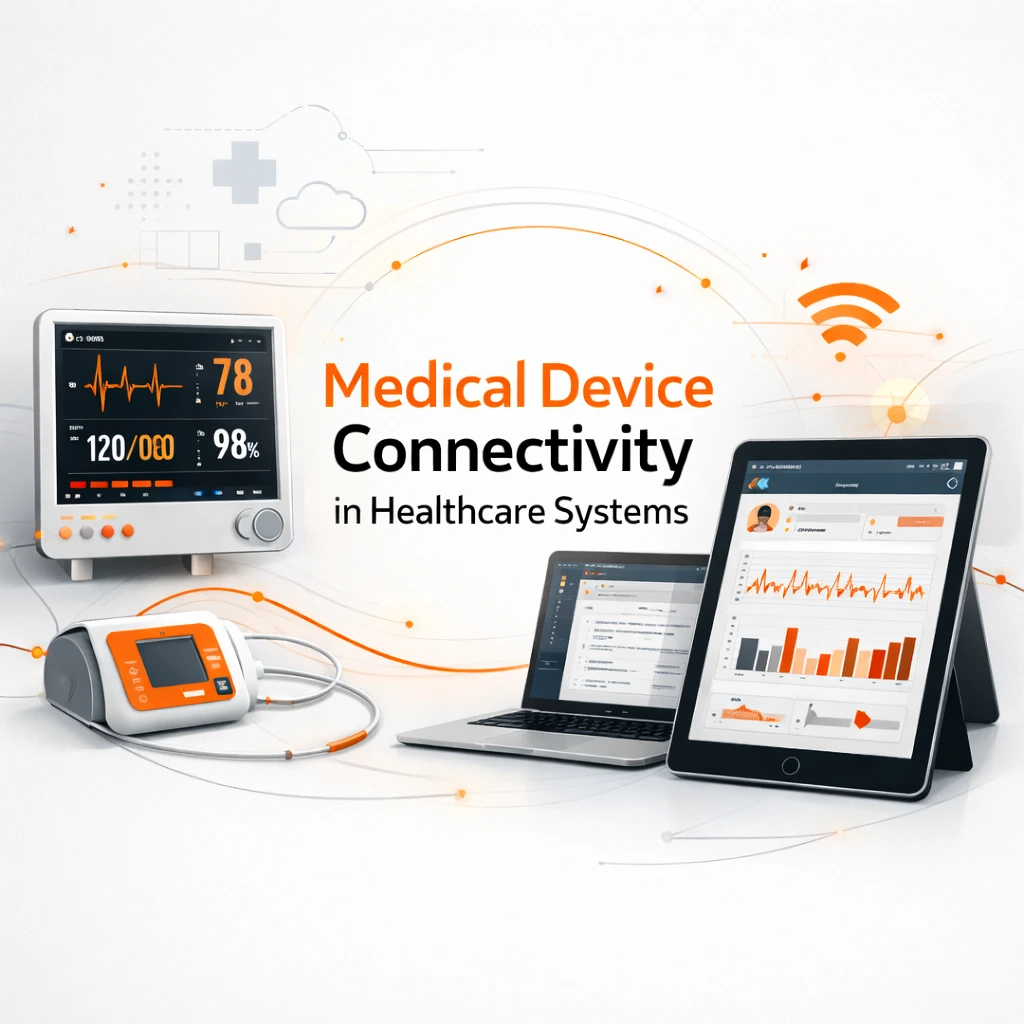
Medical device connectivity is no longer a technical upgrade; it is a strategic necessity for modern healthcare organizations. From bedside monitors to wearable devices and advanced imaging systems, connected medical devices now generate critical real-time data that must flow securely and seamlessly across clinical systems. When healthcare device interoperability is done right, it reduces manual errors, accelerates clinical decisions, improves patient safety, and creates a fully integrated care environment.
If your organization is aiming to improve clinical workflows, enable remote patient monitoring, or modernize legacy infrastructure, investing in secure and scalable medical device connectivity can transform the way care is delivered.
The question is not whether healthcare systems should connect their devices, but how to do it efficiently, securely, and in full regulatory compliance.
What Is Medical Device Connectivity and How Does It Work?
Medical device connectivity refers to the secure exchange of data between connected medical devices and healthcare IT systems such as EHR platforms, clinical dashboards, cloud infrastructure, and analytics engines. Instead of operating as standalone machines, modern medical equipment communicates continuously to create a unified digital healthcare ecosystem.
In practical terms, medical device connectivity enables devices like patient monitors, infusion pumps, ventilators, imaging systems, and wearable health trackers to transmit real-time data to centralized systems. This process is powered by standardized communication protocols, APIs, middleware platforms, and secure network infrastructure.
Core Components of Medical Device Connectivity
- Communication Protocols
Standards such as HL7 and FHIR enable healthcare device interoperability by ensuring structured and consistent medical data exchange. You can explore official interoperability guidance from the Office of the National Coordinator for Health IT at
https://www.healthit.gov - Integration Engines and Middleware
Middleware platforms act as translators between devices and clinical systems. They harmonize data formats, reduce compatibility issues, and enable seamless clinical device integration. - Secure Data Transmission
Encryption, authentication mechanisms, and compliance frameworks such as HIPAA ensure patient data protection. The U.S. Food and Drug Administration provides cybersecurity guidance for connected medical devices at
https://www.fda.gov/medical-devices/digital-health-center-excellence/cybersecurity - Cloud and Edge Computing
Cloud platforms allow scalable storage and analytics, while edge computing enables faster processing near the device for time-sensitive clinical decisions.
Healthcare organizations looking to build scalable connectivity infrastructure often rely on custom healthcare solutions through expert application development services.
Why Medical Device Connectivity Matters in Modern Healthcare?
Medical device connectivity is not just about linking equipment. It directly impacts patient outcomes, operational efficiency, regulatory compliance, and long-term digital transformation strategies.
1. Improved Clinical Decision Making
When connected medical devices stream accurate real-time data into EHR systems, clinicians gain instant visibility into patient vitals, treatment responses, and risk indicators. This reduces delayed interventions and enhances patient safety.
Clinical software platforms that support advanced device integration are essential for achieving this level of interoperability. Learn how comprehensive clinical software development services can support connected healthcare ecosystems
2. Reduction in Manual Errors
Manual data entry increases the risk of transcription errors and incomplete records. Automated medical device data exchange eliminates these risks and improves documentation accuracy across clinical workflows.
3. Enhanced Remote Patient Monitoring
With the rise of the Internet of Medical Things, connected healthcare devices now extend beyond hospitals. Wearables and home monitoring systems transmit patient data to providers in real time, enabling proactive care management and early intervention.
Healthcare providers building scalable digital health solutions often leverage specialized medical app development services.
4. Operational Efficiency and Cost Reduction
Connected systems streamline workflows, reduce administrative overhead, and improve resource allocation. Real-time device monitoring also supports predictive maintenance and minimizes downtime.
5. Stronger Regulatory Alignment
Interoperability is increasingly emphasized by regulatory bodies. The 21st Century Cures Act promotes improved healthcare data exchange and patient access to information. You can review regulatory insights at
https://www.congress.gov
By aligning medical equipment connectivity strategies with national interoperability goals, healthcare organizations stay competitive and compliant.
Medical Device Connectivity Standards and Interoperability Frameworks
For medical device connectivity to function effectively across hospitals, clinics, and remote care environments, standardized communication frameworks are essential. Without interoperability standards, connected medical devices would produce fragmented data that cannot be reliably integrated into clinical systems.
HL7 and FHIR
Health Level Seven, commonly known as HL7, is one of the most widely adopted standards for medical data exchange. FHIR, which stands for Fast Healthcare Interoperability Resources, enhances HL7 by enabling modern API based communication between healthcare applications and devices.
FHIR supports structured, secure, and scalable healthcare device interoperability. It allows connected medical devices to integrate seamlessly with EHR platforms, telehealth systems, and analytics dashboards.
You can review official interoperability resources at the Office of the National Coordinator for Health IT
https://www.healthit.gov/topic/interoperability
DICOM for Medical Imaging
DICOM is the standard protocol used for imaging devices such as MRI, CT scanners, and ultrasound systems. It ensures that medical imaging data is stored, transmitted, and displayed consistently across systems.
IEEE 11073 for Device Communication
IEEE 11073 focuses on point-of-care medical device communication. It supports plug-and-play integration and simplifies clinical device integration within hospitals.
APIs and Modern Integration Layers
Application programming interfaces allow secure and real-time communication between devices, mobile apps, and clinical platforms. Organizations developing interoperable healthcare systems often rely on advanced engineering frameworks outlined in this guide, as well as programming languages for healthcare app development.
Selecting the right technology stack plays a major role in ensuring secure, scalable, and compliant medical equipment connectivity.
How Medical Devices Connect to Clinical Systems?
Understanding the technical pathways behind medical device connectivity helps healthcare organizations plan better infrastructure and integration strategies.
Wired Connectivity
Traditional hospital systems often use Ethernet, serial ports, or USB connections for stable and low-latency data exchange. Wired infrastructure is still common in ICU and operating room environments where reliability is critical.
Wireless Connectivity
Wireless technologies such as WiFi, Bluetooth Low Energy, and secure IoT protocols allow greater mobility and flexibility. Wearables, infusion pumps, and bedside monitors frequently rely on wireless connectivity to transmit real-time health data.
Cloud-Based Connectivity
Cloud infrastructure enables centralized storage, advanced analytics, and remote access to patient data. Cloud-enabled connected medical devices support telemedicine, population health management, and predictive analytics.
Healthcare organizations building scalable cloud-connected ecosystems often partner with experts in application development services.
Edge Computing
Edge computing processes medical data closer to the device rather than sending everything to the cloud. This reduces latency and supports immediate clinical decisions in critical care settings.
A well-designed system architecture balances edge processing and cloud scalability to optimize performance and security.
Security and Regulatory Compliance in Connected Medical Devices
As medical device connectivity expands, cybersecurity and compliance become non-negotiable priorities. Healthcare data is highly sensitive, and connected devices can become entry points for cyber threats if not properly secured.
Cybersecurity Risks in Connected Healthcare
Common risks include
Unauthorized network access
Ransomware attacks
Data interception during transmission
Legacy device vulnerabilities
The U.S. Food and Drug Administration provides detailed cybersecurity guidance for medical devices
https://www.fda.gov/medical-devices/digital-health-center-excellence/cybersecurity
Healthcare organizations should implement encryption, network segmentation, secure authentication protocols, and continuous monitoring to mitigate risks.
HIPAA and Data Privacy Compliance
Connected medical devices must comply with HIPAA requirements to ensure secure handling of protected health information. You can review HIPAA compliance standards through the U.S. Department of Health and Human Services
https://www.hhs.gov/hipaa/index.html
Secure Software Architecture
Security must be embedded into the design phase, not added later. This includes secure APIs, encrypted data transmission, role-based access control, and regular vulnerability assessments.
Organizations investing in secure digital health ecosystems often integrate cybersecurity best practices into comprehensive clinical software development services.
Building medical device connectivity with compliance and cybersecurity at the core protects patient trust and strengthens long-term operational resilience.
Use Cases of Medical Device Connectivity
Medical device connectivity is transforming healthcare delivery across hospitals, outpatient clinics, and remote care environments. Below are some of the most impactful real-world applications.
Remote Patient Monitoring
Connected medical devices such as wearable ECG monitors, glucose monitors, blood pressure cuffs, and pulse oximeters allow clinicians to monitor patients outside traditional clinical settings. Real-time medical data exchange enables early detection of complications and reduces hospital readmissions.
Intensive Care Unit Monitoring
In critical care environments, multiple devices continuously generate patient data. Medical equipment connectivity consolidates this information into centralized dashboards, improving visibility and response times.
Smart Infusion Pumps and Medication Safety
Connected infusion pumps can integrate directly with EHR systems to validate medication orders and dosing parameters. This reduces medication errors and enhances patient safety.
Imaging and Diagnostic Systems
Imaging devices connected through DICOM protocols allow radiologists and specialists to securely access, analyze, and share imaging data across departments and facilities.
Telehealth and Virtual Care Platforms
Device connectivity enables telemedicine platforms to incorporate biometric data into virtual consultations, supporting more accurate diagnoses and treatment decisions.
User-centered interface design plays a crucial role in these systems. Thoughtful healthcare UX can improve usability and clinician adoption through expert product design services.
Challenges in Implementing Medical Device Connectivity
While the benefits are substantial, healthcare organizations must navigate several technical and operational challenges.
Device Compatibility Issues
Healthcare facilities often use equipment from multiple vendors. Legacy systems may not support modern interoperability standards, creating integration bottlenecks.
Data Standardization and Harmonization
Different devices generate data in different formats. Without standardized frameworks like HL7 or FHIR, medical device data exchange can become fragmented and inconsistent.
Cybersecurity Threats
As connectivity increases, so does the attack surface. Vulnerabilities in outdated firmware, unsecured networks, or poorly configured APIs can expose healthcare systems to serious risks.
The Cybersecurity and Infrastructure Security Agency provides healthcare security resources at
https://www.cisa.gov/healthcare-and-public-health-sector
Infrastructure Limitations
Reliable connectivity requires strong network infrastructure, scalable cloud systems, and continuous monitoring capabilities. Hospitals with outdated IT infrastructure may face scalability constraints.
Regulatory Complexity
Medical device connectivity solutions must align with evolving regulatory frameworks. Compliance requirements vary by region and device classification, making regulatory planning a critical component of implementation.
Future Trends in Medical Device Connectivity and IoMT
Medical device connectivity is rapidly evolving alongside advances in artificial intelligence, cloud computing, and next-generation networks.
Internet of Medical Things Expansion
The Internet of Medical Things is connecting everything from hospital beds to wearable biosensors. This interconnected ecosystem supports proactive, data-driven healthcare delivery.
Artificial Intelligence and Predictive Analytics
AI-powered systems analyze real-time data from connected medical devices to identify patterns, predict complications, and recommend interventions before critical events occur.
5G and Low Latency Communication
Faster and more reliable wireless connectivity enhances remote monitoring capabilities and supports high-bandwidth data transmission for imaging and diagnostics.
Edge and Hybrid Cloud Architectures
Combining edge computing with cloud platforms reduces latency while maintaining centralized analytics and storage capabilities.
Best Practices for Implementing Medical Device Connectivity
To ensure a successful and secure deployment, healthcare organizations should follow these strategic best practices.
Design for interoperability from the beginning: Choose standards such as HL7 and FHIR to future-proof your integration strategy.
Prioritize cybersecurity by design: Embed encryption, access controls, and regular vulnerability testing into your architecture.
Build scalable infrastructure: Use cloud-enabled frameworks that can support growing data volumes and expanding device ecosystems.
Focus on user experience: Intuitive dashboards and workflows increase clinician adoption and reduce training overhead.
Align with regulatory requirements: Regularly review FDA and HHS guidance to maintain compliance and avoid costly setbacks.
Summing Up
Medical device connectivity is redefining how healthcare organizations deliver care, manage data, and scale innovation. From improving real-time clinical visibility to enabling remote patient monitoring and AI-driven analytics, connected medical devices are shaping the future of modern healthcare systems.
However, successful implementation requires more than just connecting equipment. It demands a secure, interoperable, and scalable strategy aligned with regulatory standards and clinical workflows.
If your organization is ready to modernize infrastructure, enhance interoperability, and build secure IoMT ecosystems, partnering with experienced healthcare technology experts can accelerate your transformation journey.
The future of healthcare is connected. The question is whether your systems are ready to keep up.
Table of Contents
1) What Is Medical Device Connectivity and How Does It Work?
2) Why Medical Device Connectivity Matters in Modern Healthcare?
3) Medical Device Connectivity Standards and Interoperability Frameworks
4) How Medical Devices Connect to Clinical Systems?
5) Security and Regulatory Compliance in Connected Medical Devices
6) Use Cases of Medical Device Connectivity
7) Challenges in Implementing Medical Device Connectivity
8) Future Trends in Medical Device Connectivity and IoMT
9) Best Practices for Implementing Medical Device Connectivity
10) Summing Up
Innovate the Future of Health Tech
CitrusBits helps MedTech leaders build smarter apps, connected devices, and XR health solutions that truly make an impact.
