


Blog
Wearable IoT Devices Driving the Future of Connected Healthcare Innovation
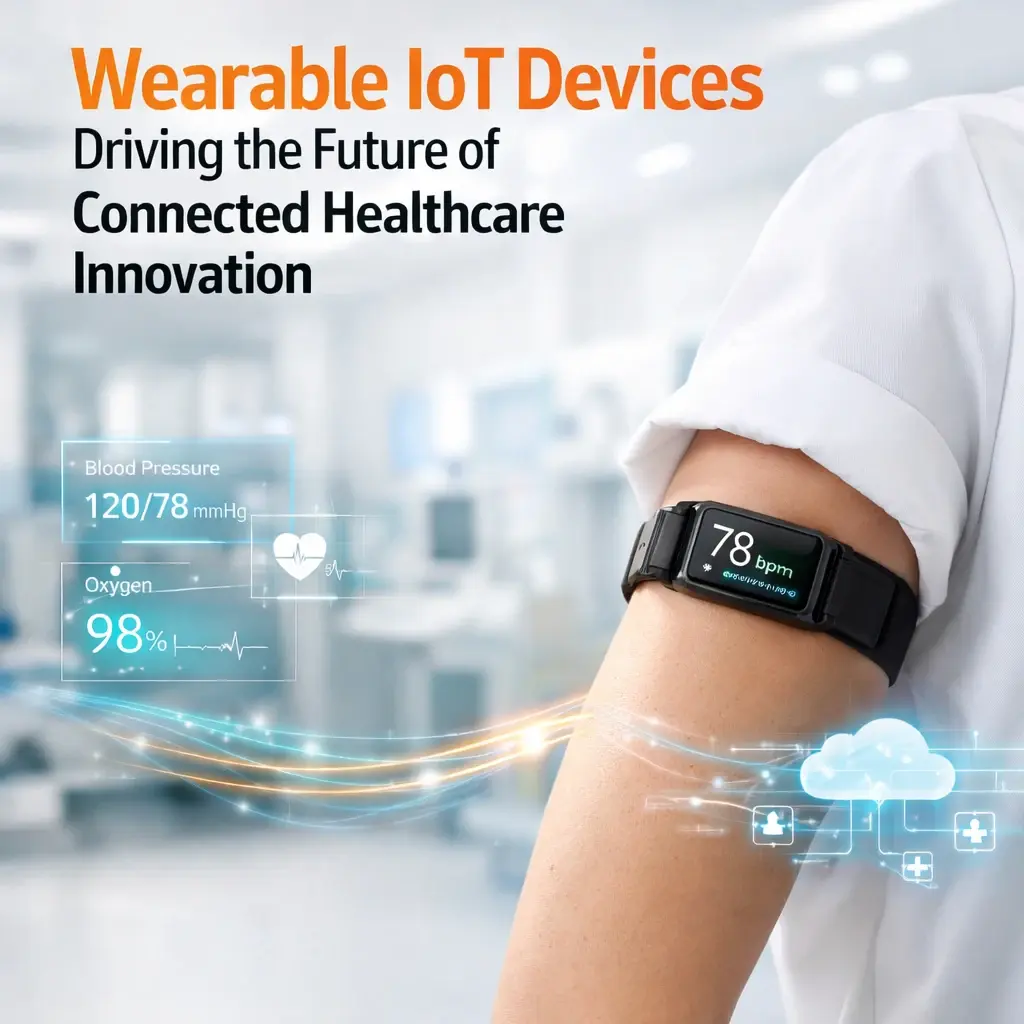
Healthcare is no longer confined to hospital walls. The rise of Wearable IoT Devices is reshaping how medical data is captured, analyzed, and acted upon in real time. For MedTech founders, medical device manufacturers, and digital health innovators, the opportunity is massive.
From AI-powered cardiac monitoring to connected rehabilitation systems, wearable healthcare IoT devices are becoming the foundation of next-generation care delivery. The real question is how to build scalable, compliant, and future-ready systems that drive clinical outcomes and revenue growth.
Today, we are going to explore how wearable IoT devices in healthcare are transforming the industry, what it takes to build them correctly, and how forward-thinking MedTech companies can turn connected intelligence into a competitive advantage.
Core Technologies Behind Wearable IoT Devices
Wearable IoT Devices are sensor-driven, connected systems designed to collect, transmit, and analyze real-time physiological or environmental data through secure digital infrastructure. These devices combine embedded hardware, connectivity protocols, cloud computing, and AI analytics to create intelligent feedback loops across healthcare and enterprise ecosystems.
In the context of wearable healthcare technology, these devices move far beyond simple fitness tracking. Modern medical wearables can monitor cardiac rhythms, glucose levels, oxygen saturation, neurological signals, respiratory performance, and rehabilitation progress with clinical-grade precision.
At a technical level, IoT in wearable devices consists of four tightly integrated layers:
- Embedded sensors and firmware that capture biometric or environmental data
- Connectivity modules such as Bluetooth, LTE, or 5G for secure transmission
- Cloud infrastructure for data processing and compliance management
- Analytics engines that transform raw signals into actionable insights
This is the backbone of Internet of Things wearables and the reason wearable healthcare IoT devices are now central to digital health strategies. For MedTech leaders, these systems are not just hardware products. They are connected data platforms that unlock subscription models, AI diagnostics, and long-term patient engagement.
Wearable IoT Devices and Strategic Use Cases
Exploring the different categories of wearable IoT devices is critical for product positioning, regulatory mapping, and commercialization strategy.
Below is a structured list of wearable healthcare IoT devices categorized by clinical and enterprise functions.
1. Diagnostic Wearable IoT Devices
These wearable IoT devices collect real-time physiological data to support early detection and clinical decision-making.
Device Type | Use Case | Data Captured | Typical Regulatory Class |
ECG Patches | Cardiac arrhythmia detection | Heart rhythm | Class II |
EEG Headbands | Neurological monitoring | Brain activity | Class II |
Smart Stethoscopes | Remote auscultation | Heart and lung sounds | Class II |
AI-Powered Imaging Wearables | Cardio and vascular diagnostics | Structural imaging data | Class II or III |
Strategic Value:
- Enables AI diagnostics
- Supports SaMD platforms
- Creates recurring revenue via data subscriptions
2. Monitoring Wearable Healthcare IoT Devices
These devices continuously track patient vitals and chronic conditions.
Device Type | Condition | Business Model |
Continuous Glucose Monitors | Diabetes | Device plus subscription |
Pulse Oximeter Wearables | Respiratory disease | Clinical contracts |
Smart Blood Pressure Bands | Hypertension | Remote monitoring platform |
Temperature Monitoring Patches | Infection detection | Hospital deployment |
Strategic Impact:
- Enables remote patient monitoring
- Reduces hospital readmissions
- Supports value-based care reimbursement
3. Therapeutic Wearable IoT Medical Devices
These wearable IoT devices do not just monitor, they intervene.
Device Type | Application | Revenue Opportunity |
Neuromodulation Wearables | Migraine management | Prescription based |
Insulin Delivery Systems | Diabetes care | Integrated device ecosystem |
Smart Inhalers | Asthma treatment | Pharma partnerships |
Pain Management Stimulators | Chronic pain therapy | Insurance reimbursable |
Strategic Value:
- Moves from monitoring to treatment
- Increases device lifetime value
- Strengthens regulatory positioning
4. Rehabilitation and Assistive IoT Wearables
Critical for XR, therapeutic, and assistive technology companies.
Device Type | Use Case | Industry |
Smart Orthotics | Gait correction | Rehabilitation tech companies |
Motion Tracking Suits | Physical therapy | XR rehabilitation platforms |
Neuro Feedback Headsets | Cognitive therapy | Mental health innovators |
Smart Prosthetics | Assistive mobility | Connected device manufacturers |
Strategic Impact:
- Enables data-driven rehabilitation
- Integrates with XR therapy systems
- Expands digital therapeutic ecosystems
5. Industrial and Enterprise IoT Wearables
Not limited to healthcare settings.
Device Type | Application | Industry |
Smart Helmets | Workforce safety | Manufacturing |
Biometric ID Wearables | Secure facility access | Hospitals |
AR Smart Glasses | Surgical visualization | Healthcare systems |
Fatigue Monitoring Bands | Workforce health | Industrial operations |
These IoT wearables are becoming foundational in hospital operations, biotech labs, and life sciences facilities.
The Role of Wearable IoT Devices in Healthcare
Wearable IoT devices in healthcare are transforming how care is delivered, reimbursed, and scaled. For SaMD companies, AI MedTech startups, and connected medical device manufacturers, wearable healthcare IoT devices are now strategic growth drivers.
1. Remote Patient Monitoring and Chronic Care
Wearable IoT Medical Devices have become essential for managing chronic conditions such as cardiovascular disease, diabetes, and respiratory disorders. Continuous monitoring through wearable healthcare IoT devices allows clinicians to detect anomalies before they become emergencies.
Examples of wearable healthcare IoT devices include:
Device Type | Clinical Use | Strategic Impact |
ECG Patch | Cardiac rhythm monitoring | Early arrhythmia detection |
Continuous Glucose Monitor | Diabetes management | Reduced hospital admissions |
Smart Inhaler | Respiratory tracking | Improved adherence |
Neurological Headset | Seizure monitoring | Real-time intervention |
2. AI-Driven Diagnostics and SaMD Integration
Internet of Things medical devices increasingly integrate with Software as a Medical Device platforms. Real-time sensor data feeds AI models that support predictive diagnostics and clinical decision support systems.
This convergence of medical IoT devices and AI enables:
- Automated risk scoring
- Continuous patient stratification
- Predictive hospitalization alerts
- Remote therapeutic optimization
For AI MedTech startups, wearable healthcare IoT devices are the primary data engine powering machine learning pipelines. The competitive advantage comes from building secure, compliant, and scalable wearable IoT ecosystems from day one.
2. Rehabilitation and Assistive Technologies
Connected wearables are also transforming therapeutic and rehabilitation technologies. Smart orthotics, mobility tracking devices, and neurofeedback systems provide measurable recovery data and adaptive therapy protocols.
This evolution of IoT wearable technology supports:
- Objective rehabilitation progress tracking
- Remote therapy optimization
- Integration with virtual care platforms
- Real-time clinician feedback
The combination of medical wearables and intelligent analytics is creating a new category of connected therapeutics that aligns with value-based care models.
Key Components of IoT in Wearable Devices
To build scalable and compliant wearable IoT devices, decision makers must understand the core architecture. Whether you are developing IoT healthcare wearable device application platforms or expanding IoT applications in healthcare, the structure remains consistent.
The four main components of IoT in healthcare are:
Component | Function in Wearable IoT Devices |
Sensors and Embedded Systems | Capture biometric and environmental data |
Connectivity Infrastructure | Secure data transmission via BLE, LTE, 5G |
Cloud and Data Management | Storage, processing, HIPAA compliance |
Analytics and Application Layer | AI insights, dashboards, alerts |
Sensors and Embedded Systems
These form the physical foundation of Internet of Things medical devices. Accuracy, calibration, and firmware stability determine clinical reliability.
Connectivity Infrastructure
Secure communication protocols ensure that wearable healthcare IoT devices transmit data safely across hospital systems, cloud platforms, and remote dashboards. Device authentication and encryption are critical in regulated healthcare environments.
Cloud and Compliance Architecture
Cloud infrastructure must support:
- HIPAA compliance
- Scalable data ingestion
- Role-based access control
- Audit trails and device lifecycle management
Regulatory mapping is essential, especially for FDA-classified devices. Understanding approval pathways is critical for medical IoT devices. You can review FDA classifications and regulatory considerations here:
https://citrusbits.com/fda-medical-device-classes-approval/
Analytics and Application Layer
This is where IoT Healthcare Wearable Devices Application systems deliver business value. AI models, predictive algorithms, clinician dashboards, and patient engagement apps convert data into action.
For MedTech companies and virtual care platforms, this layer determines differentiation, reimbursement potential, and long-term scalability.
Understanding these components is not just a technical requirement. It is a strategic necessity for any organization building next-generation wearable IoT devices in healthcare.
Regulatory and Compliance Considerations for Wearable IoT Medical Devices
For MedTech leaders, innovation without compliance is a risk. Wearable IoT Medical Devices operate in one of the most regulated industries in the world. Whether you are building diagnostic wearables, connected therapeutic systems, or AI-enabled medical IoT devices, a regulatory strategy must be embedded into your product roadmap from the beginning.
FDA Classification and Approval Pathways
Most wearable healthcare IoT devices fall under Class I or Class II medical devices, depending on risk profile and intended use. Some advanced diagnostic or AI-powered systems may require more rigorous review.
Understanding the correct pathway impacts:
- Time to market
- Clinical validation requirements
- Cost structure
- Commercial scalability
For a detailed breakdown of FDA classifications and approval requirements for Internet of Things medical devices, review this guide:
https://citrusbits.com/fda-medical-device-classes-approval/
Quality Systems and CAPA Integration
Connected medical devices must adhere to structured quality management systems. Corrective and Preventive Action processes are critical when addressing firmware updates, cybersecurity risks, or device performance anomalies.
For wearable healthcare IoT devices, CAPA ensures:
- Continuous performance improvement
- Regulatory compliance maintenance
- Audit readiness
- Risk mitigation during scaling
Learn more about implementing CAPA within medical device ecosystems here:
https://citrusbits.com/capa-medical-device/
Cybersecurity and Data Protection
Medical IoT devices are high-value targets for cyber threats. Secure device architecture is not optional.
Essential requirements include:
- End-to-end encryption
- Secure boot and firmware validation
- Role-based access controls
- Continuous vulnerability monitoring
Cybersecurity in IoT wearable technology is directly tied to brand trust and enterprise adoption. Hospitals and healthcare networks demand zero-compromise security standards.
Enterprise and Industrial Applications of IoT Wearable Devices
While wearable IoT devices in healthcare dominate clinical innovation, enterprise and industrial applications are rapidly expanding. Companies across healthcare systems, biotechnology, life sciences, and manufacturing are adopting IoT wearables to improve safety, productivity, and operational intelligence.
Workforce Health Monitoring
In hospital environments and high-risk industries, wearable healthcare technology supports:
- Real-time biometric tracking
- Fatigue monitoring
- Environmental exposure detection
- Emergency response alerts
These IoT applications enhance compliance and reduce liability risks.
Smart PPE and Connected Safety
IoT wearable devices embedded in protective equipment allow organizations to track worker conditions, monitor hazardous exposure, and optimize response protocols.
Enterprise and Industrial Applications of wearable IoT devices deliver measurable ROI through:
- Reduced workplace incidents
- Lower insurance costs
- Improved workforce productivity
- Enhanced regulatory compliance
For organizations operating at scale, IoT in wearable devices becomes a strategic investment rather than an experimental initiative.
Wearable Healthcare IoT Devices Future Driven by AI and XR Innovation
The wearable healthcare IoT devices are being shaped by artificial intelligence, predictive analytics, and immersive technologies.
AI-Powered Predictive Medicine
Modern wearable healthcare IoT devices continuously generate high-volume biometric data. When combined with advanced analytics, this enables:
- Early detection of chronic disease progression
- Predictive hospitalization risk modeling
- Adaptive treatment personalization
- Real-time therapeutic adjustments
AI MedTech startups are leveraging Internet of Things healthcare data streams to build intelligent diagnostic systems that learn and improve over time.
XR Integration in Healthcare
Extended reality platforms are increasingly integrating with medical wearables to support:
- Surgical and diagnostic applications
- Education and training simulations
- Digital health and mental well-being programs
- Therapeutics and rehabilitation technologies
Wearable IoT devices act as real-time data input systems within XR ecosystems. For example, biometric feedback can dynamically adjust immersive therapy sessions or surgical visualization platforms.
Connected Ecosystems and Interoperability
The future of medical wearables lies in interoperability. Wearable healthcare IoT devices must integrate seamlessly with:
- Electronic health record systems
- Virtual care platforms
- AI diagnostic engines
- Remote patient monitoring dashboards
Organizations that build flexible and scalable architectures today will lead tomorrow’s connected healthcare landscape.
Connected assistive devices, AI diagnostics, and digital therapeutics, wearable IoT devices are not standalone products. They are intelligent nodes within a larger healthcare ecosystem that demands security, compliance, and scalable infrastructure.
The next competitive advantage will belong to companies that combine deep regulatory understanding with advanced IoT wearable technology engineering.
Healthcare Wearable Devices Application Development From Concept to Commercialization
Building successful Wearable IoT Devices requires more than hardware engineering. It demands a full-stack product strategy that integrates embedded systems, cloud infrastructure, regulatory alignment, and scalable application architecture.
For MedTech companies across SaMD, connected assistive devices, AI diagnostics, and virtual care platforms, Healthcare Wearable Devices Application Development must be structured, compliant, and commercially viable from day one.
Below is a high-level commercialization roadmap for IoT Healthcare Wearable Devices Application platforms:
Phase | Strategic Focus | Business Outcome |
Product Strategy and Validation | Market research, regulatory mapping, and ICP alignment | Reduced risk and clear positioning |
Embedded Engineering | Sensor optimization, firmware stability | Clinical grade reliability |
Cloud and Backend Architecture | HIPAA-compliant infrastructure, scalable APIs | Enterprise readiness |
AI and Analytics Integration | Predictive models, real-time alerts | Differentiated value proposition |
Regulatory and Quality Alignment | FDA pathway planning, CAPA implementation | Audit and compliance confidence |
Deployment and Scaling | DevOps, performance optimization | Faster market expansion |
Whether you are building medical wearables for chronic care or launching new IoT applications in healthcare, end-to-end execution determines long-term success.
If your organization is exploring full-stack development capabilities for connected healthcare products, learn more about our application development services.
Built for MedTech and XR Innovators
The wearable IoT ecosystem is complex, and many organizations operate across overlapping segments.
You may be a:
- SaMD company building AI-powered diagnostics
- Medical device manufacturer integrating connected capabilities
- AI MedTech startup dependent on real-time biometric data
- Rehabilitation technology provider deploying smart therapeutic systems
- Virtual care platform expanding into remote monitoring
- XR innovator supporting surgical or training applications
Across the United States and Canada, thousands of companies span medical devices, biotechnology, healthcare systems, computer hardware, wellness technology, and life sciences. Many operate in multiple categories simultaneously.
This overlap is not a challenge when the messaging and engineering strategy align with regulatory realities and product market fit.
Wearable IoT Devices serve as the digital foundation across these segments. They unify hardware, AI, cloud infrastructure, and clinical workflows into a connected ecosystem that drives measurable outcomes.
Build Secure and Scalable Wearable IoT Devices With Confidence
Wearable IoT Devices are redefining how healthcare data is captured, analyzed, and delivered. For MedTech innovators, AI startups, connected medical device manufacturers, and XR health platforms, the opportunity is significant. But success requires more than innovation. It requires regulatory clarity, secure architecture, scalable infrastructure, and strategic execution.
If your organization is ready to design, develop, or scale wearable healthcare IoT devices, explore how our team supports connected healthcare innovation at
https://citrusbits.com/
The future of Internet of Things medical devices belongs to companies that build intelligently, compliantly, and strategically.
Frequently Asked Questions
Q: What are the 4 types of IoT?
Ans: The four types of IoT are Consumer IoT, Commercial IoT, Industrial IoT, and Infrastructure IoT.
Q: What are the key components of IoT in healthcare?
Ans: The key components include sensors and embedded systems, connectivity infrastructure, cloud and data management platforms, and analytics or AI layers.
Q: What are considered IoT devices?
Ans: IoT devices are connected physical objects that collect and transmit data. In healthcare, this includes wearable healthcare IoT devices, connected infusion pumps, and remote monitoring sensors.
Q: What is the most common IoT device?
Ans: Globally, smart home devices and fitness trackers are the most common. In healthcare, heart rate monitors and glucose monitoring wearables are most prevalent.
Q: Is an Alexa an IoT device?
Ans: Yes, Alexa is an IoT device because it connects to cloud systems and exchanges data across networks, although it is not classified as a medical device.
Q: What are the 4 main components of IoT?
Ans: The four main components are sensors, connectivity, cloud infrastructure, and analytics applications.
References
- FDA Cybersecurity Guidance (Official): Cybersecurity Guidance for Medical Devices
- Wearable Technology in Healthcare Examples & Use Cases: https://builtin.com/araticles/wearable-technology-in-healthcare
3. Best Practices for IoT Cybersecurity Compliance: https://www.censinet.com/perspectives/best-practices-fda-iot-cybersecurity-compliance - Interoperability Standards for Connected Health: https://en.wikipedia.org/wiki/H.810
Table of Contents
1) Core Technologies Behind Wearable IoT Devices
2) Wearable IoT Devices and Strategic Use Cases
3) The Role of Wearable IoT Devices in Healthcare
4) Key Components of IoT in Wearable Devices
5) Regulatory and Compliance Considerations for Wearable IoT Medical Devices
6) Enterprise and Industrial Applications of IoT Wearable Devices
7) Wearable Healthcare IoT Devices Future Driven by AI and XR Innovation
8) Healthcare Wearable Devices Application Development From Concept to Commercialization
9) Built for MedTech and XR Innovators
10) Build Secure and Scalable Wearable IoT Devices With Confidence
Innovate the Future of Health Tech
CitrusBits helps MedTech leaders build smarter apps, connected devices, and XR health solutions that truly make an impact.
