


Blog
ISO 14971 Risk Management: The Foundation of Safer Medical Devices
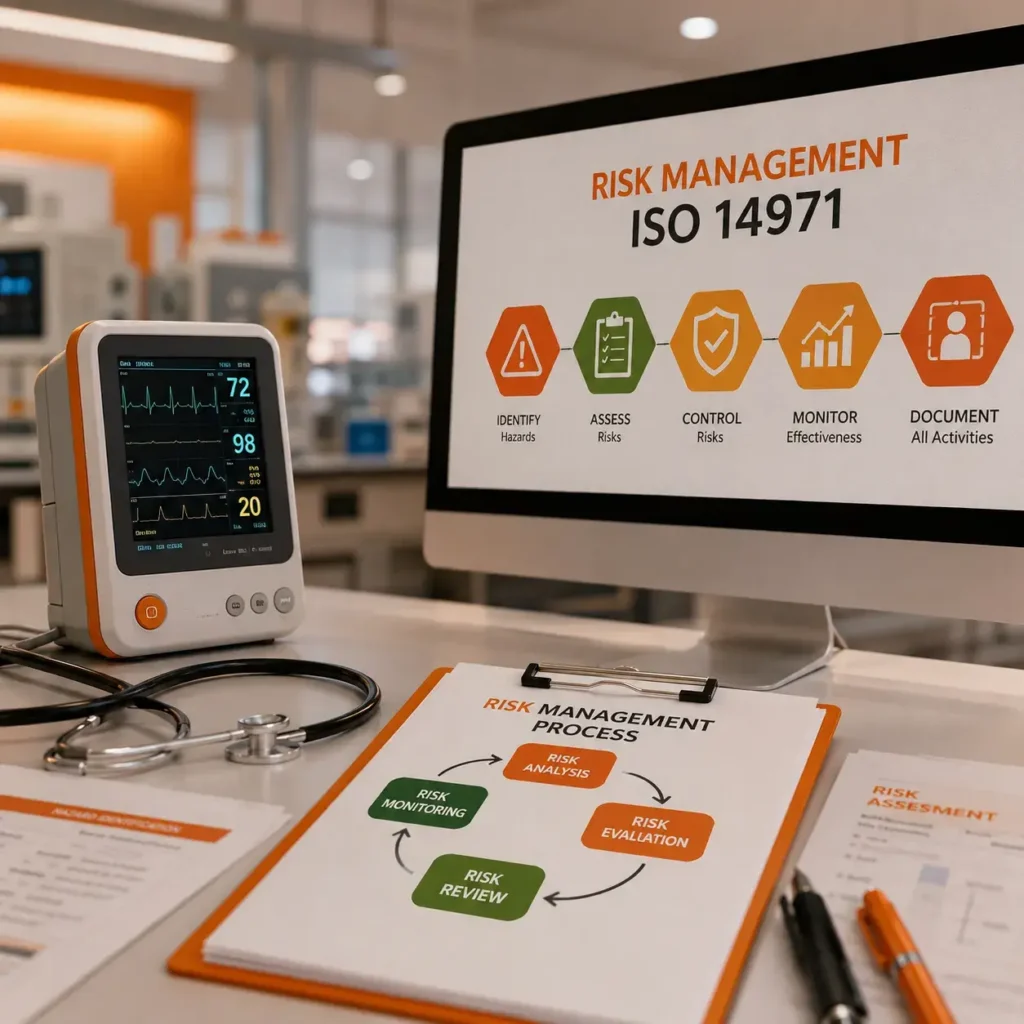
Developing a medical device without a structured risk management process can lead to safety issues, regulatory setbacks, and costly recalls. As healthcare technologies become more advanced, manufacturers need a proven framework to identify hazards, evaluate risks, and protect patients throughout a product’s lifecycle.
ISO 14971 is the internationally recognized standard for medical device risk management. It provides a systematic approach to identifying, assessing, controlling, and monitoring risks for everything from traditional medical devices to Software as a Medical Device (SaMD), AI-powered solutions, connected health platforms, and wearable technologies.
This article explores the ISO 14971:2019 standard, its requirements, benefits, implementation process, and its growing role in modern medical device development.
ISO 14971 Risk Management Standard: An Overview
ISO 14971 Risk Management is an internationally recognized framework that helps medical device manufacturers identify, evaluate, control, and monitor risks throughout a product’s lifecycle. The standard applies to a wide range of medical technologies, including hardware devices, Software as a Medical Device (SaMD), AI-powered healthcare solutions, wearable devices, and connected health platforms.
By following a structured risk management process, organizations can improve patient safety, support regulatory compliance, and reduce the likelihood of product failures, recalls, and adverse events.
What Is the Purpose of ISO 14971?
The purpose of ISO 14971 is to provide a systematic approach for managing risks associated with medical devices. Rather than eliminating risk entirely, the standard helps manufacturers identify potential hazards, implement appropriate controls, and ensure that any remaining risks are acceptable when weighed against the device’s clinical benefits.
What Is the Current Version of ISO 14971?
The current version is ISO 14971:2019, which replaced the 2007 edition. It reflects modern regulatory expectations and provides updated guidance for managing risks across increasingly complex medical technologies. Manufacturers often use ISO/TR 24971 alongside the standard for additional implementation guidance and practical examples.
Is ISO 14971 Mandatory?
While ISO 14971 is not legally mandated in every country, it is widely considered the global benchmark for medical device risk management and is often expected by regulators.
For manufacturers seeking approval in markets such as the United States, European Union, Canada, Australia, and the United Kingdom, compliance with ISO 14971 can significantly simplify regulatory submissions and demonstrate a strong commitment to patient safety.
In practice, organizations developing medical devices, SaMD platforms, AI healthcare applications, or connected medical technologies often treat ISO 14971 as an essential requirement rather than an optional standard.
ISO 14971 Medical Device Risk Management Standard Explained
The ISO 14971 medical device risk management standard establishes a common language and framework for assessing safety throughout the product lifecycle.
Understanding a few key concepts is essential:
Term | Definition |
Hazard | A potential source of harm |
Hazardous Situation | Circumstances that expose people or property to a hazard |
Harm | Physical injury, health damage, or property damage |
Risk | The combination of the probability and severity of harm |
Risk Control | Measures used to reduce risk |
Residual Risk | Remaining risk after controls are implemented |
Benefit-Risk Analysis | Assessment of whether medical benefits outweigh residual risks |
These concepts form the foundation of every ISO 14971 risk management process and support consistent decision-making throughout development.
ISO 14971 Clause 4 Risk Management Process
Clause 4 establishes the foundation for an effective risk management system by defining the organizational requirements needed to manage risk consistently.
- Management Responsibilities: Senior management must establish a risk management policy, allocate resources, and ensure that qualified personnel are responsible for risk-related activities throughout the product lifecycle.
- Risk Management Policy: Organizations must define how risks will be evaluated, controlled, and monitored. This policy should align with the company’s quality management system and regulatory obligations.
- Risk Acceptability Criteria: Before risk analysis begins, manufacturers must determine what level of risk is considered acceptable. These criteria help teams make objective decisions when evaluating hazards and selecting risk controls.
- Risk Management File: The standard requires maintaining a risk management file that documents all activities, decisions, analyses, and controls related to product safety. This file serves as critical evidence during audits, inspections, and regulatory reviews.
ISO 14971 Risk Management Process
The ISO 14971 risk management process follows a structured lifecycle approach designed to identify and control risks before they impact patients or users.
1. Risk Management Planning
The process begins by defining the scope, responsibilities, methodologies, and risk acceptance criteria for the device.
2. Risk Analysis
Manufacturers identify hazards and estimate associated risks using techniques such as:
- Failure Modes and Effects Analysis (FMEA)
- Fault Tree Analysis (FTA)
- Hazard Analysis
- Software Hazard Analysis
3. Risk Evaluation
Identified risks are compared against predefined acceptability criteria to determine whether further action is required.
4. Risk Control
When risks exceed acceptable levels, manufacturers implement control measures such as:
- Inherently safe design
- Protective mechanisms
- User instructions and warnings
5. Residual Risk Evaluation
After controls are implemented, remaining risks are reassessed to determine whether they are acceptable.
6. Risk Management Review
A final review confirms that all risk management activities have been completed and documented appropriately.
7. Production and Post-Production Monitoring
Risk management continues after market release through complaint monitoring, adverse event reporting, cybersecurity assessments, and post-market surveillance activities.
This continuous approach helps manufacturers maintain compliance and respond proactively to emerging risks throughout the device lifecycle.
ISO 14971 Risk Management Flow Chart
A structured ISO 14971 risk management flow chart helps medical device manufacturers identify, assess, control, and monitor risks throughout the product lifecycle. Following a standardized workflow ensures consistency, traceability, and compliance with global regulatory requirements.
ISO 14971 Risk Management Flow Chart
Risk Management Planning
↓
Hazard Identification
↓
Risk Analysis
↓
Risk Evaluation
↓
Risk Control Implementation
↓
Residual Risk Assessment
↓
Benefit-Risk Analysis
↓
Risk Management Review
↓
Production & Post-Production Monitoring
This framework is especially important for organizations developing Software as a Medical Device (SaMD), connected healthcare solutions, and advanced digital health technologies, where risks can evolve throughout the product lifecycle.
Manufacturers should also align their risk management activities with the FDA’s Quality Management System Regulation (QMSR) and the European Medical Device Regulation (MDR) to support regulatory submissions and market access.
ISO 14971 Risk Management Process Diagram
The ISO 14971 risk management process diagram illustrates how risk management activities interact throughout design, development, validation, commercialization, and post-market monitoring.
Unlike a simple checklist, risk management is an ongoing process that requires continuous review as new information becomes available. Risks identified during usability testing, software verification, clinical evaluation, or post-market surveillance may require additional controls and documentation updates.
For example, when developing healthcare software solutions or AI-enabled medical applications, manufacturers must continuously assess software failures, cybersecurity vulnerabilities, algorithm bias, and data integrity risks.
The process typically operates as a continuous cycle:
Planning → Analysis → Evaluation → Control → Verification → Monitoring → Improvement
This iterative approach helps manufacturers maintain product safety while supporting compliance with standards such as IEC 62304 for medical device software and IEC 62366 for usability engineering.
ISO 14971:2019 Risk Management Plan Template
A comprehensive ISO 14971:2019 risk management plan serves as the foundation of an effective risk management program. It documents how risks will be identified, evaluated, controlled, and monitored throughout the medical device lifecycle.
A typical risk management plan should include:
Device Description
Define the device’s intended use, indications, user groups, operating environment, and key functional requirements.
For organizations developing medical devices, this section establishes the context needed for accurate hazard identification.
Risk Management Scope
Clearly define which components, software modules, hardware systems, and external interfaces are covered by the risk management process.
Roles and Responsibilities
Assign responsibilities for risk analysis, reviews, approvals, verification activities, and post-market monitoring.
Risk Acceptability Criteria
Establish predefined criteria that determine whether identified risks are acceptable or require additional controls.
Risk Analysis Methodology
Document the tools and techniques used, such as:
- Failure Modes and Effects Analysis (FMEA)
- Fault Tree Analysis (FTA)
- Hazard Analysis
- Software Hazard Analysis
Risk Control Activities
Define how risks will be reduced through design controls, protective measures, cybersecurity safeguards, and user information.
This is particularly critical for portable healthcare devices and connected medical products that rely on software, sensors, and cloud infrastructure.
Post-Market Surveillance Plan
Specify how complaints, adverse events, field performance data, and cybersecurity incidents will be collected and analyzed after commercialization.
A well-documented risk management plan not only supports ISO 14971 compliance but also accelerates regulatory reviews and strengthens overall product quality.
What Are the Requirements of ISO 14971?
Understanding the requirements of ISO 14971 is essential for manufacturers seeking to develop safe, compliant, and market-ready medical devices. The standard requires organizations to establish a documented process for identifying, evaluating, controlling, and monitoring risks throughout the device lifecycle.
Key ISO 14971 requirements include:
Risk Management Planning: Organizations must create a risk management plan that defines responsibilities, methodologies, review activities, and risk acceptability criteria before development begins.
Risk Analysis: Manufacturers must systematically identify hazards related to the device, intended use, foreseeable misuse, software functionality, and operating environment.
For organizations developing healthcare software solutions or Software as a Medical Device (SaMD), this includes software failures, cybersecurity vulnerabilities, and data integrity risks.
Risk Evaluation: Each identified risk must be evaluated against predefined acceptance criteria to determine whether additional controls are required.
Risk Control: Manufacturers must implement appropriate risk reduction measures and verify their effectiveness.
Residual Risk Evaluation: After controls are applied, remaining risks must be reassessed to ensure they are acceptable and do not outweigh the device’s benefits.
Risk Management File: All activities, analyses, decisions, and supporting evidence must be documented within a risk management file.
Production and Post-Production Activities: Organizations must continuously monitor complaints, adverse events, field performance data, and emerging risks after product launch.
What Are the Benefits of ISO 14971?
Implementing ISO 14971 delivers benefits that extend beyond regulatory compliance. It helps organizations improve product quality, reduce business risk, and strengthen patient safety.
Some of the most significant benefits include:
Improved Patient Safety:
A structured risk management process helps identify potential hazards before they impact patients, healthcare providers, or end users.
Faster Regulatory Approvals:
Regulatory bodies expect manufacturers to demonstrate robust risk management practices. Proper implementation can streamline submissions and reduce review delays.
Reduced Product Recalls:
Early identification and mitigation of risks help prevent costly recalls, field corrections, and safety notices.
Better Product Design Decisions:
Risk-based decision-making enables development teams to prioritize features, controls, and design improvements that deliver the greatest value.
Lower Legal and Financial Exposure:
Managing risks proactively can reduce liability, litigation risks, and compliance-related costs.
Greater Stakeholder Confidence:
Healthcare providers, regulators, investors, and patients are more likely to trust products developed under a mature risk management framework.
For organizations building medical devices and digital health products, ISO 14971 provides a competitive advantage by embedding safety into every stage of development.
ISO 14971 and AI in Medical Device Risk Management
As artificial intelligence becomes increasingly integrated into healthcare, risk management strategies must evolve to address new challenges that traditional medical devices do not face.
ISO 14971 and AI in Medical Device Risk Management focus on identifying and controlling risks associated with machine learning algorithms, predictive models, and autonomous decision-making systems.
Unique AI Risks
AI-powered medical devices introduce risks such as:
- Algorithm bias
- Data quality issues
- Model drift
- Inaccurate predictions
- Lack of explainability
- Continuous learning challenges
These risks can directly impact clinical decisions and patient outcomes if not properly managed.
AI Risk Control Strategies
Manufacturers can reduce AI-related risks through:
- Dataset validation
- Human oversight mechanisms
- Performance monitoring
- Model validation and verification
- Cybersecurity controls
- Continuous post-market monitoring
Organizations developing AI-enabled healthcare applications should integrate ISO 14971 risk management activities directly into the software development lifecycle.
AI and Regulatory Expectations
Global regulators increasingly expect manufacturers to demonstrate how AI risks are identified, evaluated, controlled, and monitored throughout the product lifecycle.
This is particularly important for companies developing advanced digital health solutions and clinical decision support systems powered by machine learning.
ISO 14971 for Software as a Medical Device (SaMD)
The growing adoption of digital health technologies has made ISO 14971 a critical standard for Software as a Medical Device (SaMD).
Unlike traditional hardware devices, software-based medical products face unique risks related to functionality, cybersecurity, interoperability, cloud infrastructure, and data management.
For SaMD products, risk management should address:
- Software defects
- Cybersecurity threats
- Data corruption
- System downtime
- Integration failures
- User interface issues
- Clinical decision-making errors
Organizations developing SaMD solutions should align ISO 14971 with IEC 62304 software lifecycle requirements to establish a comprehensive quality and safety framework.
By integrating risk management early in development, teams can reduce rework, improve compliance readiness, and accelerate time-to-market.
ISO 14971 for Portable Healthcare Devices and Connected Medical Products
Portable healthcare devices and connected medical products introduce additional risk considerations due to their reliance on software, sensors, wireless communication, and cloud connectivity.
Examples include:
- Remote patient monitoring systems
- Wearable health trackers
- Smart diagnostic devices
- Connected infusion pumps
- Mobile health applications
Manufacturers must evaluate risks related to:
Connectivity Failures: Loss of connectivity can interrupt data transmission and impact clinical decision-making.
Cybersecurity Threats: Connected devices are increasingly targeted by cyberattacks that may compromise patient safety and sensitive healthcare data.
Data Integrity Risks: Incomplete, delayed, or inaccurate data can affect diagnosis, treatment, and monitoring outcomes.
Device Interoperability: Connected products often exchange information with other systems, creating potential compatibility and communication risks.
Organizations developing portable healthcare devices should incorporate these factors into their ISO 14971 risk management activities from the earliest stages of development.
By proactively addressing connectivity, cybersecurity, and interoperability risks, manufacturers can deliver safer, more reliable healthcare technologies while supporting regulatory compliance and market success.
Common ISO 14971 Implementation Mistakes
Even organizations with established quality management systems can encounter challenges when implementing ISO 14971. Avoiding these common mistakes can improve compliance, reduce development delays, and strengthen patient safety.
Treating Risk Management as a One-Time Activity:
Risk management should continue throughout the entire product lifecycle. New hazards can emerge during verification testing, clinical use, software updates, or post-market surveillance.
Incomplete Hazard Identification:
Many teams focus only on obvious product risks while overlooking usability issues, cybersecurity threats, interoperability challenges, and foreseeable misuse scenarios.
Weak Risk Control Measures:
Implementing warnings alone is often insufficient. ISO 14971 prioritizes risk reduction through inherently safe design and protective measures whenever possible.
Poor Documentation:
Incomplete risk management files can create significant challenges during audits, inspections, and regulatory submissions.
Ignoring Post-Market Feedback:
Customer complaints, adverse events, and field performance data provide valuable insights into emerging risks that may require corrective action.
Organizations developing medical device software and healthcare applications should establish ongoing monitoring processes to ensure risk management remains effective after launch.
How to Implement ISO 14971 Successfully?
Successful implementation requires more than documentation. It requires integrating risk management into every stage of product development and maintenance.
Phase 1: Conduct a Gap Assessment
Evaluate existing quality processes, risk management procedures, and regulatory requirements to identify areas for improvement.
Phase 2: Develop a Risk Management Plan
Create a documented plan that defines responsibilities, methodologies, acceptance criteria, and review processes.
Phase 3: Identify and Analyze Risks
Perform hazard identification and risk analysis using techniques such as FMEA, Fault Tree Analysis, and software hazard analysis.
Phase 4: Implement Risk Controls
Reduce unacceptable risks through design modifications, protective mechanisms, cybersecurity safeguards, and user information.
Phase 5: Verify and Validate Controls
Confirm that risk controls are effective and do not introduce new hazards.
Phase 6: Monitor Product Performance
Continuously evaluate post-market data, customer feedback, software updates, and field performance to identify emerging risks.
Manufacturers that integrate risk management into product development from the start often experience fewer regulatory issues and a more efficient path to commercialization.
How ISO 14971 Supports FDA, MDR, and ISO 13485 Compliance
ISO 14971 serves as the foundation for many regulatory and quality management requirements within the medical device industry.
- FDA Compliance
The FDA expects manufacturers to establish risk-based processes throughout the product lifecycle. ISO 14971 provides a structured framework that aligns closely with FDA quality system expectations.
- European MDR Compliance
The European Medical Device Regulation (MDR) places significant emphasis on risk management, benefit-risk analysis, clinical evaluation, and post-market surveillance.
Manufacturers seeking CE marking often rely on ISO 14971 to demonstrate compliance with MDR requirements.
- ISO 13485 Integration
ISO 13485 and ISO 14971 work together to establish a comprehensive quality and risk management framework.
While ISO 13485 defines quality management system requirements, ISO 14971 provides the methodology for managing product risks throughout development and commercialization.
Risk management activities often intersect with additional standards, including:
- IEC 62304 (Medical Device Software)
- IEC 62366 (Usability Engineering)
- ISO 14155 (Clinical Investigations)
- ISO 27001 (Information Security Management)
For organizations developing medical devices, SaMD solutions, and connected healthcare platforms, aligning these standards can streamline regulatory approvals and strengthen product quality.
Why Partner With an ISO 14971 Risk Management Consulting Company?
Implementing ISO 14971 effectively requires a deep understanding of medical device development, regulatory requirements, software engineering, cybersecurity, and quality management systems.
A specialized ISO 14971 risk management consulting partner can help organizations:
- Develop risk management plans and files
- Perform hazard analysis and FMEA assessments
- Establish risk acceptability criteria
- Prepare for FDA and MDR submissions
- Integrate risk management into development workflows
- Support post-market surveillance activities
For organizations building innovative healthcare technologies, early risk management involvement can significantly reduce development costs, accelerate market entry, and improve compliance outcomes.
At CitrusBits, we help healthcare organizations develop compliant and patient-centered digital health solutions, including Software as a Medical Device (SaMD), healthcare software platforms, AI-powered healthcare applications, and connected medical devices.
By integrating ISO 14971 principles throughout the development lifecycle, we help teams build safer products while meeting evolving regulatory expectations.
Summary
As medical devices become more sophisticated, risk management is no longer just a regulatory requirement. It is a critical component of product quality, patient safety, and long-term market success. ISO 14971 provides a structured framework for identifying hazards, evaluating risks, implementing controls, and continuously monitoring product performance throughout the device lifecycle.
Whether you’re developing traditional medical hardware, Software as a Medical Device (SaMD), AI-powered healthcare solutions, connected devices, or remote monitoring platforms, effective risk management helps reduce uncertainty and improve compliance outcomes.
Table of Contents
1) ISO 14971 Risk Management Standard: An Overview
2) Is ISO 14971 Mandatory?
3) ISO 14971 Medical Device Risk Management Standard Explained
4) ISO 14971 Clause 4 Risk Management Process
5) ISO 14971 Risk Management Process
6) ISO 14971 Risk Management Flow Chart
7) ISO 14971 Risk Management Process Diagram
8) ISO 14971:2019 Risk Management Plan Template
9) What Are the Requirements of ISO 14971?
10) What Are the Benefits of ISO 14971?
11) ISO 14971 and AI in Medical Device Risk Management
12) ISO 14971 for Software as a Medical Device (SaMD)
13) ISO 14971 for Portable Healthcare Devices and Connected Medical Products
14) Common ISO 14971 Implementation Mistakes
15) How to Implement ISO 14971 Successfully?
16) How ISO 14971 Supports FDA, MDR, and ISO 13485 Compliance
17) Why Partner With an ISO 14971 Risk Management Consulting Company?
18) Summary
Innovate the Future of Health Tech
CitrusBits helps MedTech leaders build smarter apps, connected devices, and XR health solutions that truly make an impact.
