

Blog
Blogs
Healthcare UX Design: Why It Directly Impacts Patient Outcomes
BLOG by
CitrusBits
January 18, 2022
#XR #VR #UX #UI
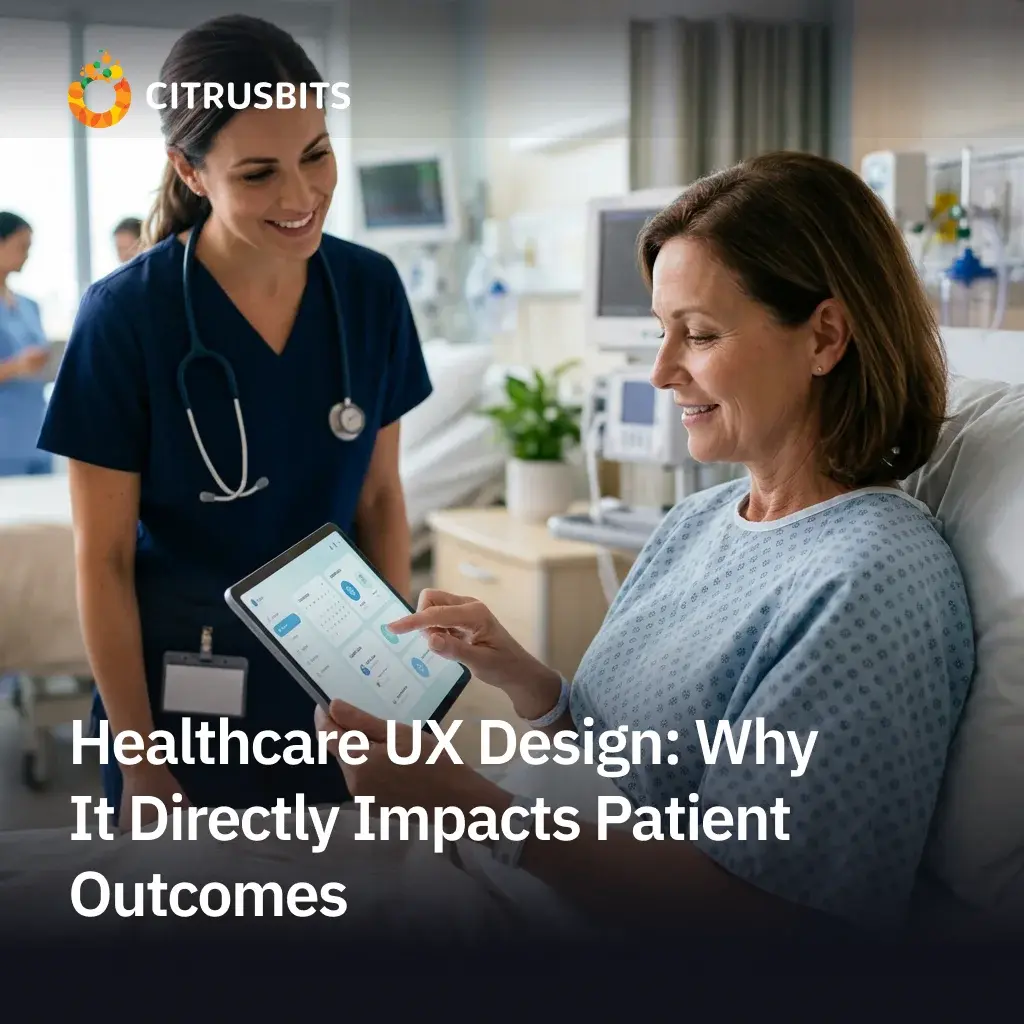
Healthcare is no longer confined to hospitals and clinical environments. It now operates across mobile applications, remote monitoring systems, connected devices, and data-driven platforms. As this shift accelerates, healthcare UX design is becoming a critical layer within the overall system architecture, not just a visual or interaction component.
In high-stakes environments where clinicians rely on real-time data and patients interact with digital interfaces to manage their health, poor UX is more than a usability issue. It introduces risk. Misaligned information hierarchies, unclear data visualization, and inefficient workflows can directly impact clinical decisions, delay interventions, and reduce patient adherence.
Modern healthcare user experience must account for complex variables, including multi-user interactions, high-density data environments, regulatory constraints, and performance requirements. This makes medical UX design fundamentally different from traditional UX disciplines, requiring a deeper integration between design, engineering, and healthcare workflows.
Beyond Interfaces: UX as a System Layer
Healthcare UX design extends far beyond layouts, colors, and navigation patterns. In modern digital health platforms, UX operates as a system layer that connects user interaction with underlying data infrastructure and application logic.
Every interaction in a healthcare application triggers a chain of events. When a clinician reviews patient vitals on a dashboard or a patient logs symptoms through a mobile app, the experience depends on how efficiently the interface communicates with backend systems, APIs, and real-time data pipelines. Any delay, inconsistency, or ambiguity in this flow can affect decision-making and user trust.
This is why healthcare user experience design must be tightly aligned with system architecture. It requires close collaboration between designers and engineers to ensure that interfaces are not only intuitive but also performant, reliable, and capable of handling complex healthcare data.
Multi-Actor Complexity in Healthcare UX
Unlike most digital products, healthcare platforms are designed for multiple user groups with significantly different needs and responsibilities. These typically include patients, clinicians, caregivers, and administrative staff.
Each user group interacts with the system in a unique way. Clinicians require fast access to critical data with minimal friction, while patients need simplified, guided experiences that reduce confusion and encourage engagement. Administrative users often deal with workflows related to scheduling, reporting, and system management.
Designing for this level of complexity requires a deep understanding of user roles, workflows, and context. It also demands flexible UX systems that can adapt interfaces based on user type, permissions, and real-time scenarios.
Data-Driven Interfaces and Real-Time UX Constraints
Healthcare applications are inherently data-intensive. From electronic health records to live monitoring systems, interfaces must handle large volumes of structured and unstructured data while maintaining clarity and usability.
Real-time data adds another layer of complexity. In scenarios such as remote patient monitoring or critical care dashboards, delays in data rendering or poor visualization can lead to missed signals and delayed interventions.
Effective medical UX design addresses these challenges by focusing on:
- Clear data hierarchy and prioritization
- Efficient rendering of real-time data streams
- Visual clarity in charts, alerts, and dashboards
- Minimization of cognitive load for users under pressure
As healthcare systems continue to evolve, the ability to design data-driven, responsive, and reliable user experiences will play a central role in determining the success of digital health products.
Why Healthcare UX Design Directly Impacts Patient Outcomes
Healthcare UX design is not an isolated layer. It directly influences how data is interpreted, how decisions are made, and how consistently patients engage with care protocols. In digital health systems, outcomes are often a function of how effectively users interact with technology.
UX Design and Clinical Error Reduction
Clinical environments operate under time pressure and high cognitive load. In such conditions, even small UX inefficiencies can lead to significant errors.
From a technical perspective, poor interface design can introduce:
- Ambiguous data hierarchy where critical values are not clearly prioritized
- Inconsistent interaction patterns that slow down user response time
- Input errors caused by poorly designed forms or lack of validation mechanisms
- Latency in UI rendering that delays access to time-sensitive data
For example, if a clinician dashboard does not clearly distinguish between historical and real-time patient data, it can lead to incorrect interpretation and delayed intervention.
Effective healthcare UX design mitigates these risks through:
- Structured information architecture aligned with clinical workflows
- Real-time data synchronization with minimal latency
- Validation layers to prevent incorrect inputs
- Visual prioritization of critical alerts and anomalies
By reducing friction and ambiguity, UX becomes a mechanism for improving clinical accuracy and patient safety.
Patient Engagement and Behavioral UX Systems
Patient outcomes are heavily influenced by adherence to treatment plans, medication schedules, and follow-up protocols. This is where healthcare user experience directly intersects with behavioral design.
From a systems perspective, engagement is not just about usability. It is driven by how well the product integrates:
- Notification systems
- Feedback loops
- Progress tracking mechanisms
- Personalization engines
For instance, a remote monitoring application that presents data without context or actionable insights will struggle to retain users. On the other hand, a system that provides clear progress indicators, timely reminders, and adaptive feedback can significantly improve adherence rates.
Technical considerations include:
- Event-driven notification architecture
- Integration with wearable and IoT data streams
- User segmentation and personalization logic
- Secure handling of patient-generated health data
Well-designed medical UX transforms passive users into active participants in their care journey, directly impacting long-term health outcomes.
Workflow Optimization for Clinical Efficiency
Healthcare systems are often burdened by fragmented workflows and inefficient processes. UX plays a critical role in streamlining these interactions.
Clinician-facing platforms must support rapid task execution with minimal cognitive overhead. Poorly designed workflows can lead to:
- Increased time per patient interaction
- Redundant data entry across systems
- Interruptions in clinical processes
- Higher burnout among healthcare professionals
From a technical standpoint, optimizing workflows involves:
- Designing task-oriented interfaces aligned with real-world use cases
- Reducing the number of interaction steps required to complete actions
- Enabling seamless navigation across modules and systems
- Integrating APIs to eliminate manual data transfer between platforms
Efficient UX reduces operational friction and allows healthcare providers to focus more on patient care rather than system navigation.
Data Visualization and Decision Accuracy
Healthcare decisions are increasingly data-driven. However, the value of data depends on how effectively it is presented.
Poor data visualization can obscure critical insights, while well-designed interfaces can enhance pattern recognition and decision-making.
Key technical factors include:
- Signal-to-noise optimization to highlight relevant data points
- Real-time visualization pipelines for live monitoring systems
- Scalable chart rendering for high-volume datasets
- Context-aware dashboards that adapt based on user roles
For example, in remote patient monitoring systems, subtle changes in vital signs must be clearly visualized to enable early detection of potential issues.
By improving clarity and interpretability, healthcare UX design enhances the precision and speed of clinical decisions, directly contributing to better patient outcomes.
UX Design in Healthcare: Challenges and Innovations
Designing healthcare UX systems requires navigating a unique combination of technical, regulatory, and operational constraints. At the same time, emerging technologies are creating new opportunities to enhance user experience and system performance.
Core Challenges in Healthcare UX Systems
- Regulatory and Compliance Constraints
Healthcare applications must adhere to strict regulatory frameworks, including HIPAA and, in some cases, FDA guidelines for software as a medical device.
This introduces constraints on:
- Data storage and transmission
- User authentication and access control
- Audit trails and logging mechanisms
- Security architecture across frontend and backend systems
UX design must work within these constraints without compromising usability. For example, implementing multi-factor authentication while maintaining a smooth user flow requires careful design and engineering alignment.
- High-Density Data Environments
Healthcare platforms often deal with large volumes of complex data, including:
- Electronic health records
- Diagnostic reports
- Real-time monitoring data
Designing interfaces that can handle this data without overwhelming users is a major challenge.
Technical considerations include:
- Efficient data aggregation and filtering
- Progressive disclosure of information
- Performance optimization for large datasets
- Clear visual hierarchy across multiple data layers
- Interoperability and Fragmented Systems
Healthcare ecosystems are highly fragmented, with multiple systems operating in silos. UX design must account for integrations across:
- EHR systems
- Third-party APIs
- Medical devices
- Telehealth platforms
From an engineering perspective, this requires:
- API orchestration
- Data standardization using protocols such as FHIR
- Consistent UX across integrated systems
Without proper integration, users are forced to switch between systems, increasing friction and reducing efficiency.
- Accessibility and Diverse User Needs
Healthcare applications must serve a wide range of users, including elderly patients and individuals with varying levels of digital literacy.
UX design must ensure:
- Accessibility compliance
- Clear and simple interaction patterns
- Readable typography and contrast
- Support for assistive technologies
This adds another layer of complexity, as solutions must balance simplicity with functionality.
Innovations Driving Healthcare UX Forward
- AI-Augmented UX Systems
Artificial intelligence is enabling more adaptive and intelligent user experiences. AI can analyze user behavior and clinical data to provide:
- Predictive recommendations
- Context-aware alerts
- Automated data interpretation
From a technical standpoint, this requires integration between machine learning models and frontend interfaces, along with real-time data processing capabilities.
- Voice Interfaces and Conversational UX
Voice-enabled systems are reducing interaction friction, especially in clinical environments where hands-free operation is critical.
Applications include:
- Voice-assisted data entry
- Conversational patient interfaces
- Clinical command systems
These systems rely on natural language processing, real-time transcription, and secure data handling.
- Adaptive and Personalized UX
Modern healthcare platforms are moving toward dynamic interfaces that adapt based on user behavior, preferences, and context.
This involves:
- Role-based UI rendering
- Personalization engines
- Dynamic content delivery
Such systems improve usability and engagement by tailoring experiences to individual users.
- XR and Spatial UX in Healthcare
Extended reality is introducing new interaction paradigms in healthcare, particularly in training, simulation, and therapy.
Technical requirements include:
- Real-time rendering engines
- Hardware integration with XR devices
- Spatial interaction design
These innovations are expanding the scope of healthcare UX beyond traditional screens.
Core Principles of High-Performance Healthcare UX Design
Designing effective healthcare UX systems requires more than following standard design best practices. It involves aligning user experience with system performance, clinical workflows, and data integrity. The following principles define high-performance healthcare user experience design in modern digital health platforms.
Cognitive Load Optimization
Healthcare professionals operate in environments where attention is limited and decisions are time-sensitive. Interfaces must be designed to reduce unnecessary mental effort and surface only the most relevant information.
This involves:
- Prioritizing critical data points over secondary information
- Structuring interfaces to support quick scanning and decision-making
- Minimizing the number of steps required to complete tasks
- Using visual hierarchy to guide attention
From a technical standpoint, this requires close alignment between frontend rendering and backend data prioritization to ensure that essential data is always available and clearly visible.
Error Prevention Architecture
In healthcare systems, errors can have serious consequences. UX must be designed to prevent mistakes before they occur rather than relying on correction after the fact.
Key strategies include:
- Input validation at both client and server levels
- Confirmation workflows for high-risk actions
- Context-aware alerts and warnings
- Constraints that prevent invalid data entry
This requires implementing validation logic across the entire system stack, ensuring that the interface, APIs, and database layers work together to maintain data integrity.
System Performance and Latency Optimization
Performance is a critical component of healthcare UX. Delays in data retrieval or interface responsiveness can disrupt workflows and impact decision-making.
Technical considerations include:
- Optimizing API response times
- Implementing caching strategies for frequently accessed data
- Using real-time data streaming where necessary
- Ensuring smooth rendering of high-density data interfaces
Low-latency systems enable faster interactions and more reliable user experiences, particularly in time-sensitive clinical environments.
Context-Aware UX Systems
Healthcare applications must adapt to different users, roles, and scenarios. A static interface cannot effectively serve all use cases.
Context-aware UX systems dynamically adjust based on:
- User roles and permissions
- Device type and environment
- Real-time data conditions
This requires implementing role-based access control, dynamic UI rendering, and adaptive workflows that respond to changing conditions within the system.
Interoperable UX Design
Healthcare platforms rarely operate in isolation. Users interact with multiple systems, and the experience must remain consistent across all touchpoints.
Interoperable UX design focuses on:
- Maintaining consistent interaction patterns across integrated systems
- Ensuring seamless data flow between platforms
- Reducing friction caused by system switching
From an engineering perspective, this depends on API orchestration, adherence to standards such as FHIR, and unified design systems that span across applications.
Designing Scalable Healthcare Product Design Systems
As healthcare platforms grow, maintaining consistency and scalability becomes a major challenge. This is where structured healthcare product design systems play a critical role.
A design system provides a centralized framework for building and maintaining consistent user interfaces across products.
In healthcare, design systems must account for:
- Reusable UI components for dashboards, forms, and data visualization
- Standardized interaction patterns aligned with clinical workflows
- Accessibility guidelines tailored to diverse user groups
Technically, this involves creating component libraries, defining design tokens, and ensuring compatibility with frontend frameworks used in development.
Cross-Platform Consistency
Healthcare solutions often span multiple platforms, including mobile applications, web dashboards, and medical devices.
Ensuring consistency across these platforms requires:
- Unified design language
- Responsive and adaptive layouts
- Shared component architecture
This reduces learning curves for users and ensures a cohesive healthcare user experience across all touchpoints.
Integration with Engineering Pipelines
A scalable healthcare product design system must integrate seamlessly with development workflows.
This includes:
- Alignment with frontend frameworks such as React or Flutter
- Integration with backend APIs for dynamic data rendering
- Version control and continuous updates of design components
Strong collaboration between design and engineering teams ensures that UX decisions are technically feasible and efficiently implemented.
Healthcare UI UX Design Services That Drive Measurable Outcomes
At this stage, the focus shifts from understanding UX to implementing it effectively. Building high-performance healthcare user experience systems requires specialized expertise across design, engineering, and healthcare domains.
What We Build
At CitrusBits, we design and develop healthcare UX systems that are tailored to real-world use cases and technical requirements.
Our work includes:
- Patient-facing applications for engagement, monitoring, and care management
- Clinician dashboards optimized for speed, clarity, and decision-making
- Medical device UX design for connected health ecosystems
- Remote patient monitoring interfaces that handle real-time data streams
Each solution is built with a strong focus on usability, scalability, and system integration.
Technical Capabilities
Our approach to healthcare UI UX design services is grounded in technical execution.
We focus on:
- UX research and validation based on real user behavior
- Data-driven interface design for complex healthcare systems
- Integration with APIs, EHR systems, and connected devices
- Compliance-ready design aligned with healthcare regulations
By combining design thinking with engineering expertise, we ensure that every solution performs reliably in high-stakes environments.
Business Impact
Well-executed healthcare UX design delivers measurable results across both clinical and operational dimensions.
Key outcomes include:
- Reduction in clinical errors through better data clarity
- Increased patient engagement and adherence
- Improved workflow efficiency for healthcare providers
- Scalable platforms that support long-term growth
Healthcare organizations that invest in strong UX systems are better positioned to deliver high-quality care while optimizing operational performance.
The Future of Healthcare User Experience
Healthcare UX is evolving rapidly as new technologies reshape how care is delivered and experienced.
Emerging trends include:
- Predictive UX systems that anticipate user needs based on data patterns
- AI-driven personalization that adapts interfaces in real time
- Ambient computing environments where interactions happen seamlessly across devices
- Continuous care platforms that extend beyond traditional clinical settings
These advancements will further integrate UX into the core of healthcare systems, making it an essential component of both innovation and outcomes.
Final Thoughts
Healthcare UX design has moved beyond aesthetics and usability. It now plays a direct role in shaping patient outcomes, clinical efficiency, and the success of digital health platforms.
Organizations that treat UX as a core system layer rather than an afterthought are better equipped to build scalable, compliant, and impactful healthcare solutions.
Ready to Build Better Healthcare Experiences?
If you are developing digital health platforms, investing in healthcare user experience design is critical to achieving measurable results.
Partner with CitrusBits to design and build healthcare UX systems that improve patient outcomes, streamline workflows, and scale with your business.
About the Author

CitrusBits
Content Writer
Related blogs